Why Your Website Is the Center of Your Digital Marketing Strategy
Why Your Website Is the Center of Your Digital Marketing Strategy
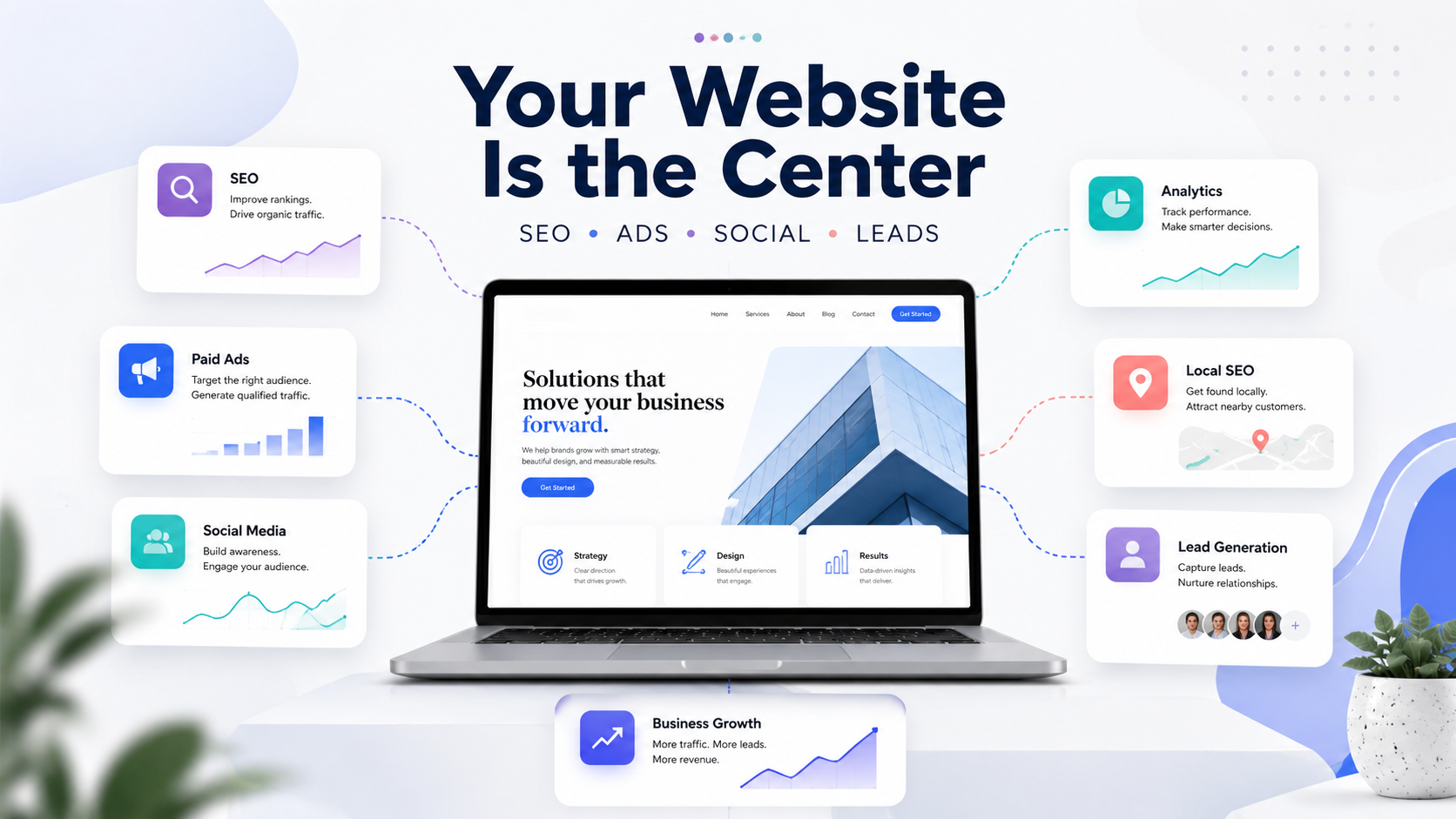
Your Website Is Not Just an Online Brochure. It Is the Foundation of Your Entire Digital Marketing Strategy.
Many small business owners think of their website as a place where people can “learn more” about the company.
That is true, but it is only part of the picture.
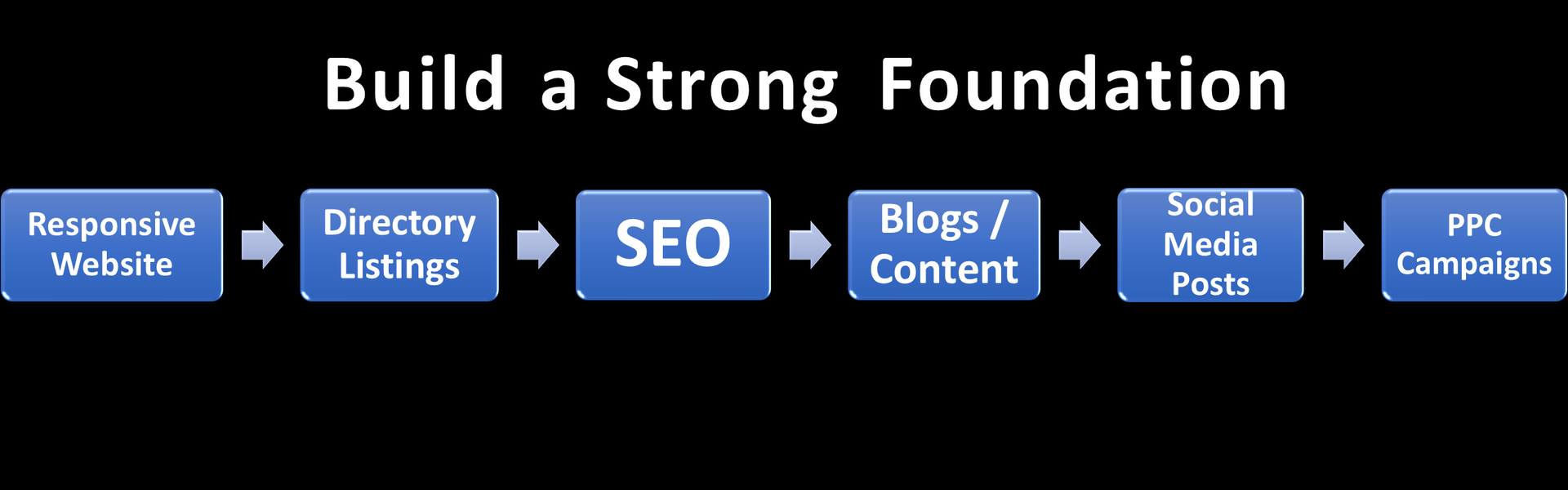
Your website is also the center of your SEO strategy, local search visibility, paid ads, social media marketing, directory listings, email marketing, online credibility, and lead generation. When your website is built correctly, every other piece of your digital marketing strategy has a stronger place to send people, educate them, build trust, and turn interest into action.
When your website is outdated, slow, confusing, hard to update, or weak from an SEO standpoint, your entire marketing strategy can suffer.
That is why a strong website should not be treated like a one-time design project. It should be treated like your digital storefront, sales tool, credibility builder, and marketing foundation.
For small businesses in Brevard County, Palm Bay, Melbourne, Suntree, Indian River County, throughout Florida, and across the country, a well-built website can be one of the most important tools for long-term business growth.
1. Your Website Gives Every Marketing Channel a Place to Work
Think of your digital marketing like a wheel.
Your social media posts, Google Business Profile, online directories, SEO content, paid ads, emails, blogs, and local search results are all spokes. Your website is the hub.
Without a strong hub, the spokes do not work as well.
A potential customer may first discover your business through:
- A Google search
- A Facebook or Instagram post
- A Google Business Profile listing
- A directory listing
- A referral from a friend
- A paid ad
- A blog article
- A LinkedIn post
- A local search for services nearby
But in most cases, they eventually end up on your website before deciding whether to contact you, call you, book a consultation, request a quote, or purchase a service.
That means your website needs to answer important questions quickly:
- What do you offer?
- Who do you help?
- Where do you provide services?
- Why should someone trust you?
- What makes you different?
- What should the visitor do next?
If your website does not clearly answer those questions, people may leave before they ever become a lead.
2. Your Website Supports SEO by Helping Search Engines Understand Your Business
SEO stands for search engine optimization. In simple terms, SEO helps search engines understand your website so the right people can find your business online.
Google explains that SEO is about helping search engines understand your content and helping users find your site and decide whether they should visit it.
That starts with your website.
A strong SEO-friendly website should include:
- Clear page titles
- Strong meta descriptions
- Helpful headings
- Well-written service pages
- Local SEO keywords
- Fast-loading pages
- Mobile-friendly design
- Descriptive image alt text
- Clean page structure
- Internal links between related pages
- Useful blog content
- Clear calls to action
This is why your website cannot be separated from your SEO strategy. Your website is where your SEO signals live.
For example, if you want to rank for services like web design, SEO, digital marketing, Google Ads, social media marketing, local SEO, or website hosting, your website needs properly structured pages that explain those services in a way both people and search engines can understand.
A business cannot rely on keywords alone. Search engines need helpful content, clear structure, crawlable pages, and a good user experience.
3. Your Website Builds Trust Before a Customer Ever Contacts You
Before many people call a business, they research it.
They may look at your website, reviews, social media pages, Google Business Profile, photos, service descriptions, pricing, blog content, and overall professionalism.
Your website plays a major role in that first impression.
An outdated or poorly built website can make people wonder:
- Is this business still active?
- Are they professional?
- Can I trust them?
- Do they offer what I need?
- Will they be responsive?
- Are they keeping up with modern expectations?
A clean, modern, helpful website can do the opposite. It can make a visitor feel more confident that your business is credible, organized, experienced, and ready to help.
This matters even more when people are comparing multiple companies. Your website may be the difference between someone choosing your business or moving on to a competitor.
4. Your Website Impacts Paid Ads and Lead Generation
Paid ads can drive traffic, but your website has to convert that traffic.
This is where many small businesses waste money.
They spend on Google Ads, Facebook Ads, Instagram Ads, YouTube Ads, or other advertising platforms, but they send visitors to a website that is slow, confusing, outdated, or missing a strong call to action.
That creates a leak in the marketing funnel.
Your ads may get clicks, but if the website does not help visitors take the next step, those clicks may not turn into leads.
A strong website can improve paid ad performance by giving visitors:
- A clear message that matches the ad
- A fast-loading page
- A mobile-friendly experience
- Helpful service information
- Trust-building proof
- Easy ways to contact the business
- A clear next step
For example, if someone clicks an ad for website design services, they should land on a page that clearly explains website design options, benefits, pricing, or next steps, and why your business is the right choice.
If they land on a generic homepage with no clear direction, the ad has to work harder than it should.
5. Your Website Helps Social Media Turn Attention Into Action
Social media is great for visibility, relationship-building, education, and brand awareness.
But social media alone does not replace your website.
A strong social media post may get someone’s attention, but your website is where they can take the next step. That could mean reading a blog, learning about your services, submitting a contact form, requesting a quote, booking a strategy session, or making a purchase.
Your website also adds value to your social media content by giving you a useful place to direct people.
For example:
- A Facebook post can link to a helpful blog.
- An Instagram bio link can send people to your services page.
- A LinkedIn post can drive business owners to a strategy article.
- A Google Business Profile post can send local searchers to a website built offer.
- A Threads or X post can drive quick traffic to a landing page.
The stronger your website is, the more your social media can support real business growth rather than just generating likes and comments.
6. Your Website Matters for Mobile Users More Than Ever
Many people are not viewing your website from a desktop computer. They are using their phone.
That means your website needs to work well on mobile devices.
Google uses mobile-first indexing, which means Google primarily uses the mobile version of a site’s content for indexing and ranking. In plain English, Google is looking closely at what your website experience is like on mobile.
A mobile-friendly website should be easy to read, easy to navigate, fast to load, and simple to use on a smaller screen.
Mobile website issues that can hurt user experience include:
- Text that is too small
- Buttons that are hard to tap
- Pages that load slowly
- Menus that are confusing
- Forms that are difficult to complete
- Images that do not resize properly
- Pop-ups that block the page
- Important information that is missing from mobile pages
If someone has to pinch, zoom, wait, search, or fight with your website to get information, they may leave.
And when they leave, they may not come back.
7. Website Speed Can Affect User Experience, SEO, and Sales
Website speed matters because people do not want to wait.
Google’s Core Web Vitals measure real-world user experience, including loading performance, responsiveness, and visual stability. Google recommends strong Core Web Vitals for both search success and a better user experience.
One Google mobile page speed benchmark also found that 53% of mobile site visitors leave a page that takes longer than three seconds to load.
That is a major problem for small businesses.
A slow website can lead to:
- Higher bounce rates
- Fewer leads
- Lower ad performance
- Poorer user experience
- Less trust
- Missed sales opportunities
- Weaker search performance over time
This is one reason website hosting, code quality, image optimization, mobile responsiveness, and page structure matter.
A website should not just look good. It should perform well.
8. Your Website Makes It Easier to Keep Your Marketing Current
Your business changes over time.
You may add new services, update pricing, publish blogs, launch promotions, feature customer success stories, add photos, improve FAQs, or adjust your messaging.
If your website is difficult to update, your marketing can quickly become outdated.
That creates problems.
Outdated website content can confuse visitors and weaken trust. It can also make it harder to keep your SEO strategy fresh because search engines and users both benefit from accurate, helpful, current information.
A strong website should make updates easier, not harder.
This is why Mercier Marketing Group focuses on building websites that are mobile-responsive, SEO-conscious, professionally structured, and easy for business owners to manage without needing to code.
For businesses that want help, ongoing website support, SEO, blogs, social media, directory listings, and paid ads can work together to keep the full digital marketing foundation active and aligned.
9. Your Website Connects Local SEO With Real Business Growth
For local businesses, your website and local SEO should work together.
Your Google Business Profile, online directories, reviews, local keywords, location pages, service pages, and website content all help build your local online presence.
For example, a Brevard County business may want to be found by customers searching in Palm Bay, Melbourne, Suntree, Indian River County, and nearby communities. A strong website can support that visibility by including clear service information, local context, optimized page titles, helpful content, and accurate business details.
Your website can also support broader visibility across Florida and nationally when your business serves customers beyond your immediate local area.
The key is strategy.
Local SEO should not feel like random city names stuffed into a page. It should be written naturally so people understand who you help, where you work, and why your business is relevant to their needs.
10. Your Website Should Guide Visitors Toward One Clear Next Step
A website should not leave visitors guessing about what to do next.
Every important page should guide people toward an action.
That action might be:
- Call your business
- Request a quote
- Book a consultation
- Purchase a service
- Fill out a form
- Read a related blog
- Download a guide
- View your pricing
- Visit your services page
The best call to action depends on the page and the customer journey.
For a website service page, the next step may be to request a website build. For a blog, it may be to schedule a free strategy session. For a pricing page, it may be to purchase the service or contact the business with questions.
The goal is simple: make it easy for interested people to move forward.
Why Business Owners Should Not Treat Their Website as a “Set It and Forget It” Project
A website should not sit untouched for years.
Your website is part of your marketing system. Like SEO, ads, social media, and content, it should be reviewed and improved over time.
Business owners should periodically review:
- Are the services accurate?
- Are the calls to action clear?
- Are the pages loading quickly?
- Does the website work well on mobile?
- Are the photos and visuals current?
- Are the page titles and meta descriptions optimized?
- Are blogs supporting relevant search terms?
- Are internal links helping visitors find related information?
- Are forms working correctly?
- Is the website supporting your current business goals?
A website that worked three years ago may not be enough today.
Customer expectations change. Search engine guidance evolves. Competitors improve. Your services grow. Your messaging becomes sharper.
That is why your website should grow with your business.
How Mercier Marketing Group Helps Build Stronger Website Foundations
Mercier Marketing Group is a Brevard County-based digital marketing agency helping small businesses in Palm Bay, Melbourne, Suntree, Indian River County, throughout Florida, and across the country build stronger digital marketing foundations.
Our website approach is built around more than appearance.
We focus on:
- Mobile-responsive website design
- SEO-friendly page structure
- Fast, reliable AWS-powered website hosting
- Clear service messaging
- Easy-to-manage website editing
- Strong calls to action
- Helpful content opportunities
- Local SEO support
- Directory listing opportunities
- Social media and paid ad alignment
- Long-term digital marketing growth strategy
A good website should not just exist. It should support visibility, credibility, user experience, and lead generation.
That is the difference between having a website and having a website that works as part of your marketing strategy.
Key Takeaways
- Your website is the foundation of your SEO, paid ads, social media, local SEO, and lead generation strategy.
- A strong website helps search engines understand your business and helps users decide whether to contact you.
- Mobile responsiveness, page speed, clear messaging, and easy navigation all matter.
- Paid ads and social media work better when they send people to a helpful, conversion-focused website.
- Local SEO is stronger when your website clearly supports your service areas and business goals.
- Your website should be reviewed and updated regularly so it continues supporting business growth.
Frequently Asked Questions
Why is a website important for digital marketing?
Your website is important because it gives your SEO, ads, social media, local listings, and content marketing a central place to send people. It helps visitors learn about your business, compare your services, build trust, and take action.
Can social media replace a business website?
Social media can help with visibility and engagement, but it should not replace your website. You do not fully control social media platforms, algorithms, layouts, or reach. Your website gives your business a more stable online home that you own and control.
How does web design affect SEO?
Web design can affect SEO through mobile responsiveness, site speed, page structure, headings, navigation, user experience, image optimization, internal links, and how easily search engines can crawl and understand your content.
Why does mobile responsiveness matter?
Mobile responsiveness matters because many users visit websites on mobile devices, and Google uses the mobile version of a website for indexing and ranking. A website that is hard to use on mobile can lose visitors, leads, and trust.
How often should a business update its website?
A business should review key website pages at least every 6 to 12 months. Core service pages may need review every 6 months, while blogs and FAQ content can usually be reviewed annually unless services, pricing, offers, or search trends change sooner.
What should a small business website include?
A strong small business website should include clear service pages, contact information, location or service area details, trust-building content, mobile-friendly design, fast loading speed, optimized page titles and descriptions, helpful images with alt text, and clear calls to action.
Why does website speed matter for business growth?
Website speed matters because slow pages can cause visitors to leave before they contact you. Speed can affect user experience, lead generation, paid ad performance, and long-term search visibility.
Ready for a Website That Supports Your Marketing Instead of Holding It Back?
Your website should be more than a digital placeholder. It should work as the center of your SEO, social media, paid ads, local visibility, and lead generation strategy.
If your current website is outdated, slow, hard to update, mobile-unfriendly, or not helping your business grow, Mercier Marketing Group can help you build a stronger foundation.
Request your website build with Mercier Marketing Group and start creating a website that supports long-term digital marketing growth.
Website:
https://www.MercierMarketingGroup.com
Phone: (321) 345-9366
Standard Informational Website
Sources
- Google Search Central: SEO Starter Guide — https://developers.google.com/search/docs/fundamentals/seo-starter-guide
- Google Search Central: Understanding Core Web Vitals and Google Search Results — https://developers.google.com/search/docs/appearance/core-web-vitals
- Google Search Central: Mobile Site and Mobile-First Indexing Best Practices — https://developers.google.com/search/docs/crawling-indexing/mobile/mobile-sites-mobile-first-indexing
- Think with Google: Find Out How You Stack Up to New Industry Benchmarks for Mobile Page Speed — https://think.storage.googleapis.com/docs/mobile-page-speed-new-industry-benchmarks.pdf
- Amazon Web Services: AWS Global Infrastructure — https://aws.amazon.com/about-aws/global-infrastructure/